The History
Created by Donn Beach (Don the Beachcomber). The Pernod dash is a signature Donn Beach technique—a tiny amount of anise to round and integrate. He used it in several canonical builds.
Ingredients
- 0.75 oz light rum (Bacardi Superior or Don Q Cristal)
- 1.5 oz dark rum (Coruba or Myer’s)
- 0.75 oz fresh lime juice
- 0.5 oz falernum
- 0.5 oz triple sec
- 1 dash Angostura bitters
- 1 dash Pernod
- Maraschino cherry (garnish)
Directions
Combine all ingredients in a shaker with crushed ice.
Shake well.
Pour everything (don’t strain) into a double old-fashioned glass.
Add more crushed ice to fill.
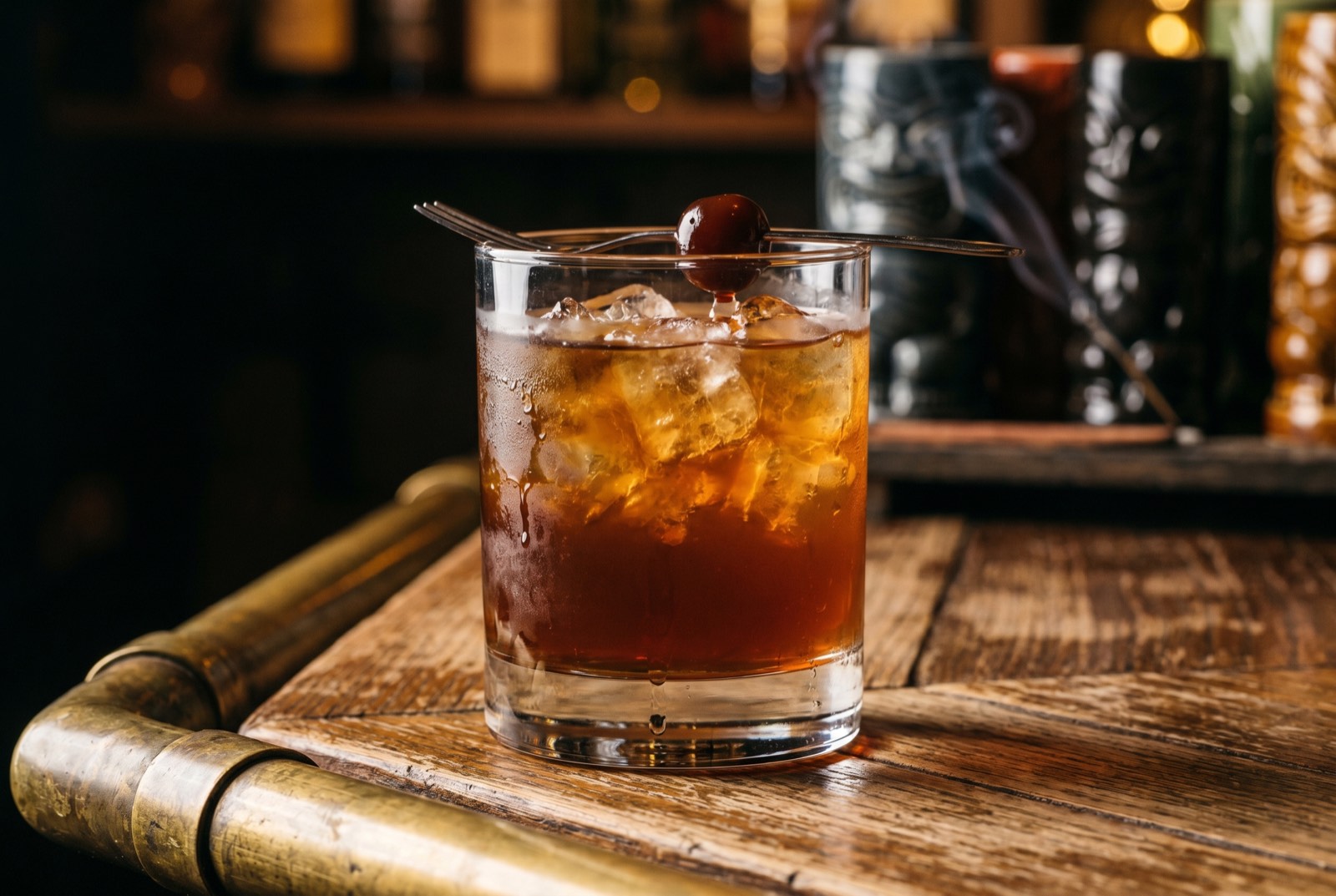
Garnish with a maraschino cherry on an oyster fork.
Ceremonial Serve
The oyster fork on the rim of a Test Pilot is one of Donn Beach’s quiet inventions—a piece of mid-century cocktail theater that doesn’t really need to exist and is much better for existing anyway. A regular cocktail pick would do the job. The fork is the editorial flourish that signals Don the Beachcomber’s table service is different.
The fork. A real silver-plate oyster fork—small, three-tined, traditionally used for shucking and prying at the oyster bar. Antique stores and estate sales still turn them up cheap; silver-plate versions run $3–8 each. The dimensions are right: small enough to perch on the rim of a double old-fashioned without tipping, sturdy enough to pierce a cherry without bending. Stainless reproductions exist; the Donn Beach editorial calls for silver.
The cherry. Luxardo Maraschino—the dark, deep-red, almost-black variety preserved in its own syrup. The supermarket neon-red maraschino doesn’t belong on this fork. The Luxardo holds its shape on the tines and the dark red reads against the silver. Brandied cherries from Jack Rudy or Tillen Farms work as substitutes; Luxardo is the canonical.
The placement. Slide the cherry onto the middle tine. Lay the fork across the rim of the double old-fashioned with the cherry suspended just above the crushed-ice mound, the handle resting on the far rim. The drinker picks up the fork to take the cherry; the small ceremonial act of handling a real piece of cutlery—not a wooden pick, not a stir stick—is the moment the garnish is built for.
Why a fork. A wooden cocktail pick works mechanically and is fine. The oyster fork doesn’t make the cherry taste different. What it does is signal that the bar takes the cherry seriously enough to give it a proper utensil. Same editorial logic as the Three Dots and a Dash Morse-code skewer or the Mai Tai’s spent-lime hull—garnish that does editorial work the cocktail’s flavor doesn’t need. Pure theater. Worth doing.