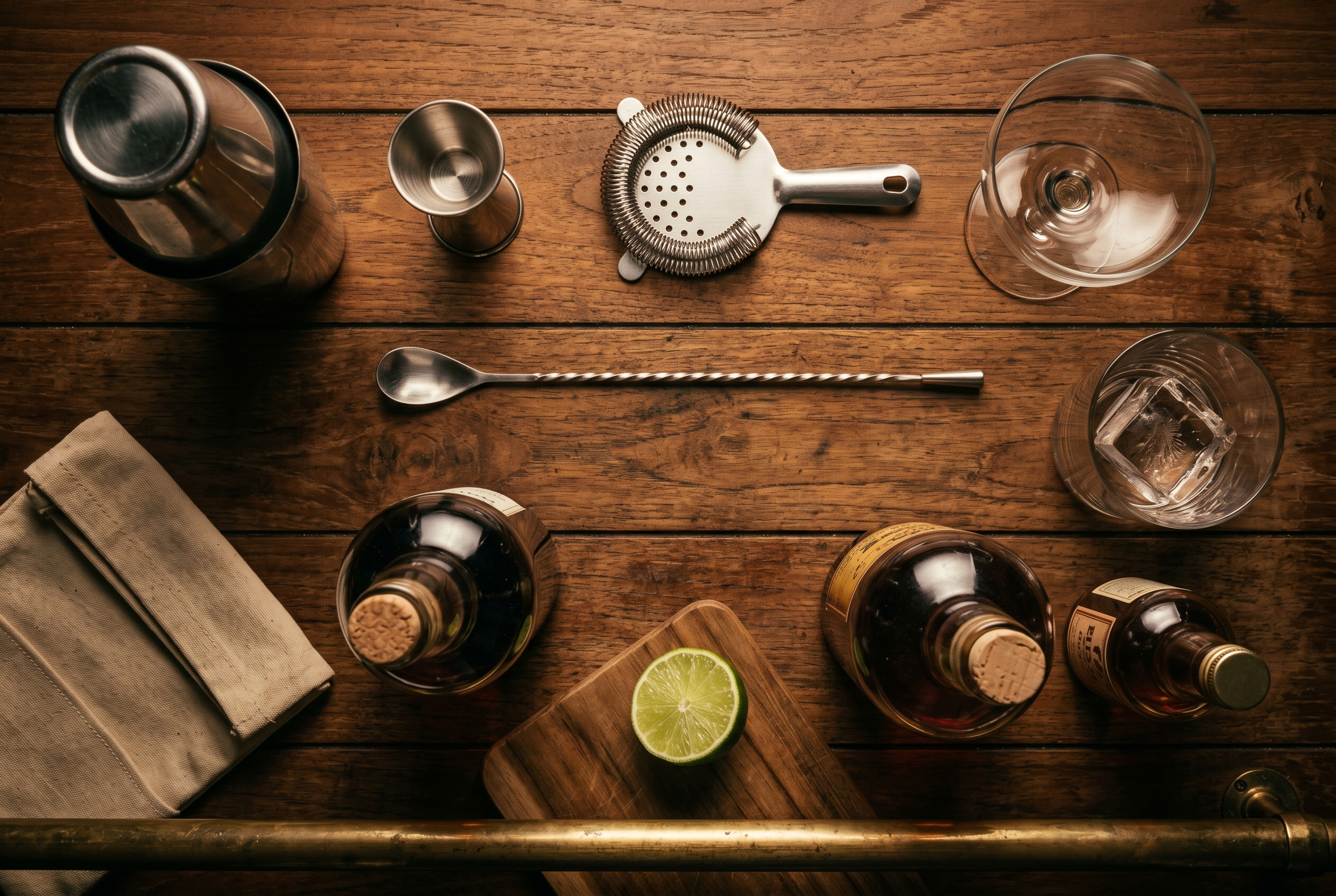
A working home bar is smaller than you think. About $200 in equipment and $200 in starter ingredients gets you to a place where you can make most of the canonical entry-level exotic cocktails at a real level. About $1,500 cumulative gets you a serious revival-quality kit—the full shelf, the right tools, the working glass set. This guide sequences the build.
The trap most new home bartenders fall into is buying too much too fast. Buy three bottles you can’t use yet and they sit on the shelf reproaching you for a year. Buy the working five rums you can use tonight and you’re making Mai Tais by Saturday. Build in waves; each wave is a real bar.
What stocking means
This guide covers equipment, ingredients, glassware, and ice. It does not cover building a physical tiki bar (the carpentry project—the A-frame roof, lava rock, bamboo siding). That’s a different piece of content for a different audience. If you’re constructing a literal tiki bar in your garage or basement, hold on for the future Building a Tiki Bar guide. Everything below is about what fills that bar once it exists, or what fills the kitchen counter if it doesn’t.
The starter kit
Total spend: about $250. The full set lets you make a Daiquiri, a Mai Tai, a Painkiller, and a Piña Colada at a real level by the weekend.
Tools (~$100)
The minimum-viable kit for shaking, stirring, straining, and measuring. Buy these once and they last decades.
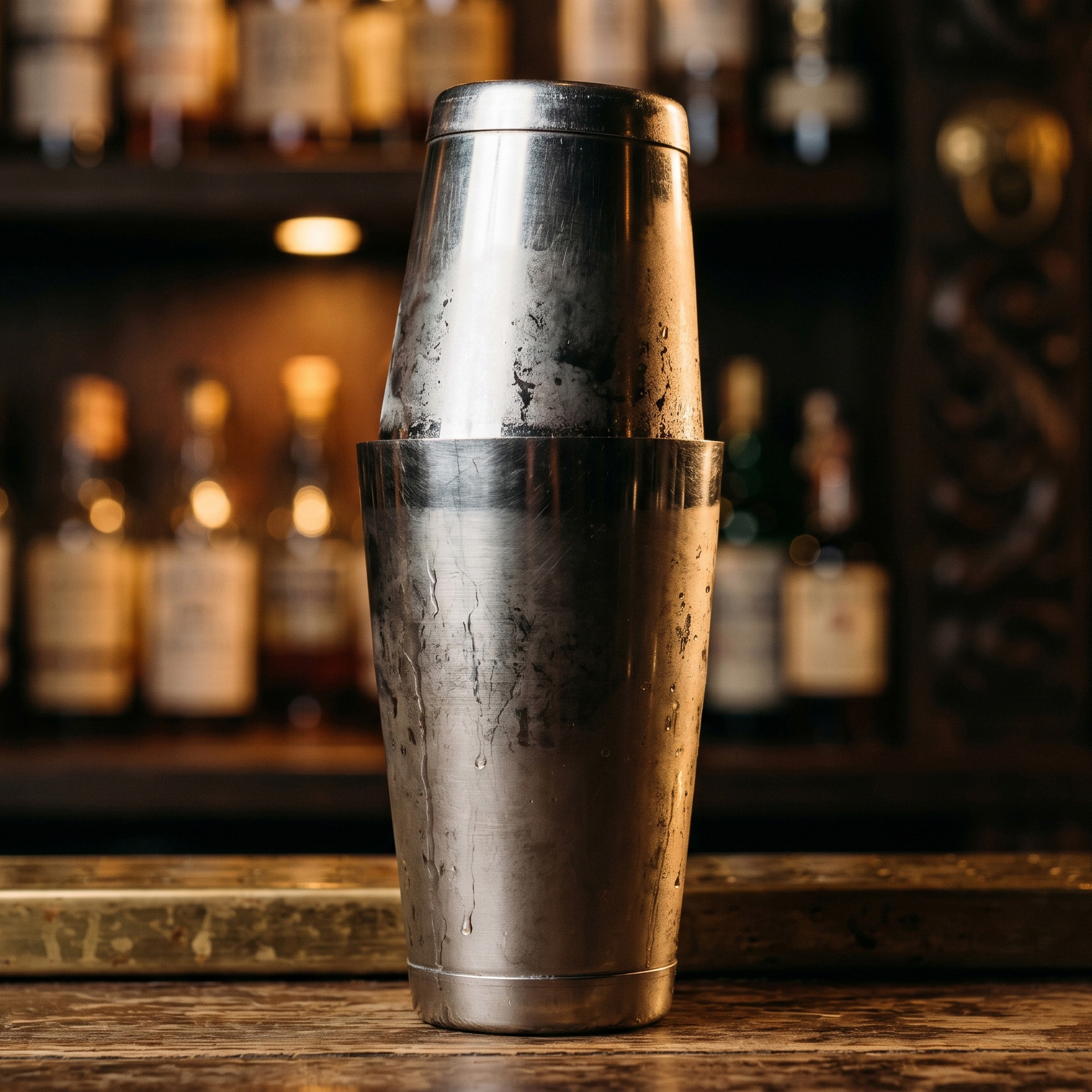
Boston shaker
Two-piece weighted tin-on-tin from Cocktail Kingdom is the working-bar standard. Cobbler shakers (the three-piece with a built-in strainer) also work but seal less reliably.
~$15
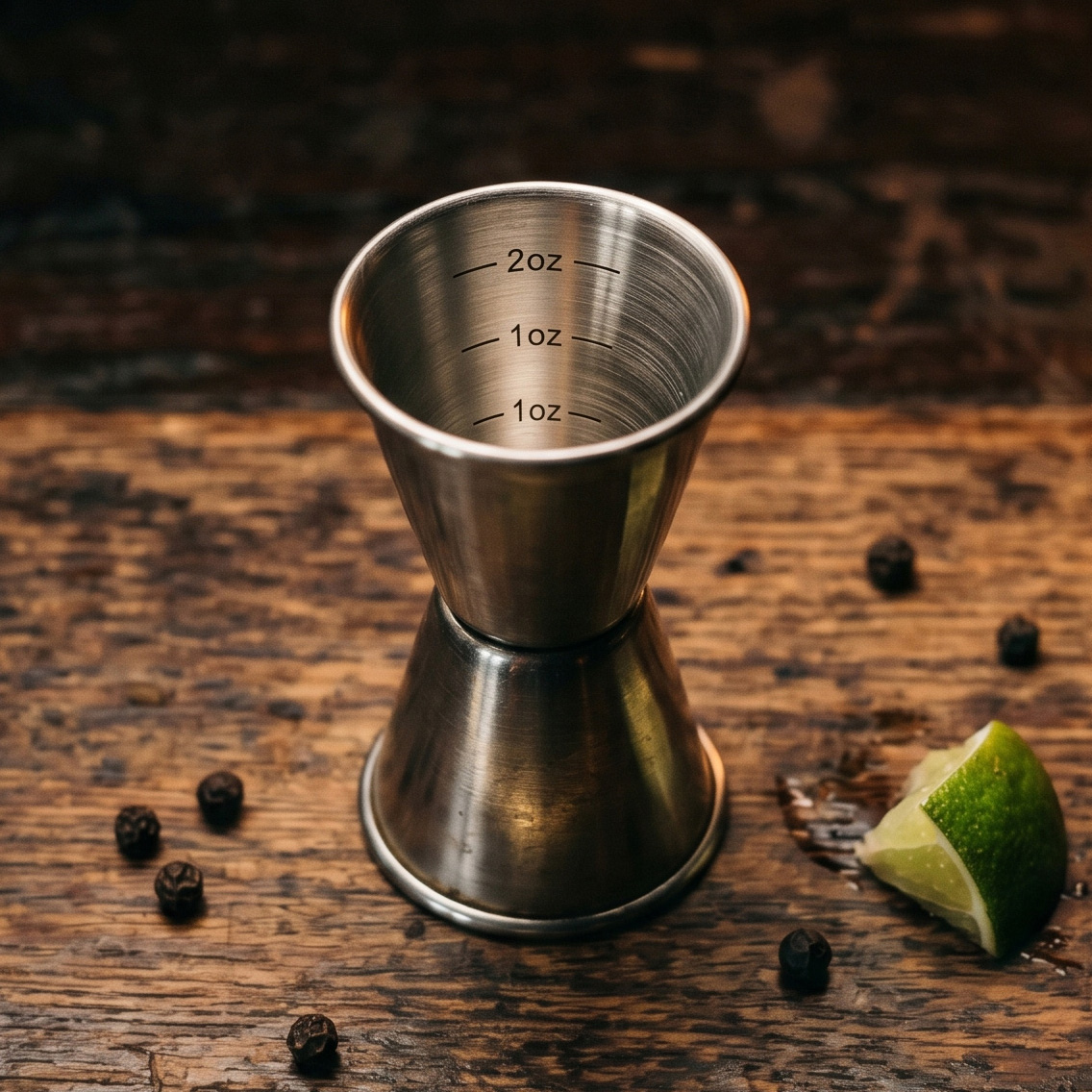
Japanese jigger
1 oz / 2 oz with 0.25, 0.5, 0.75 oz lines etched inside. Cocktail Kingdom’s Leopold is the bartender standard. Once you’ve used one, kitchen-store jiggers feel like guessing.
~$15
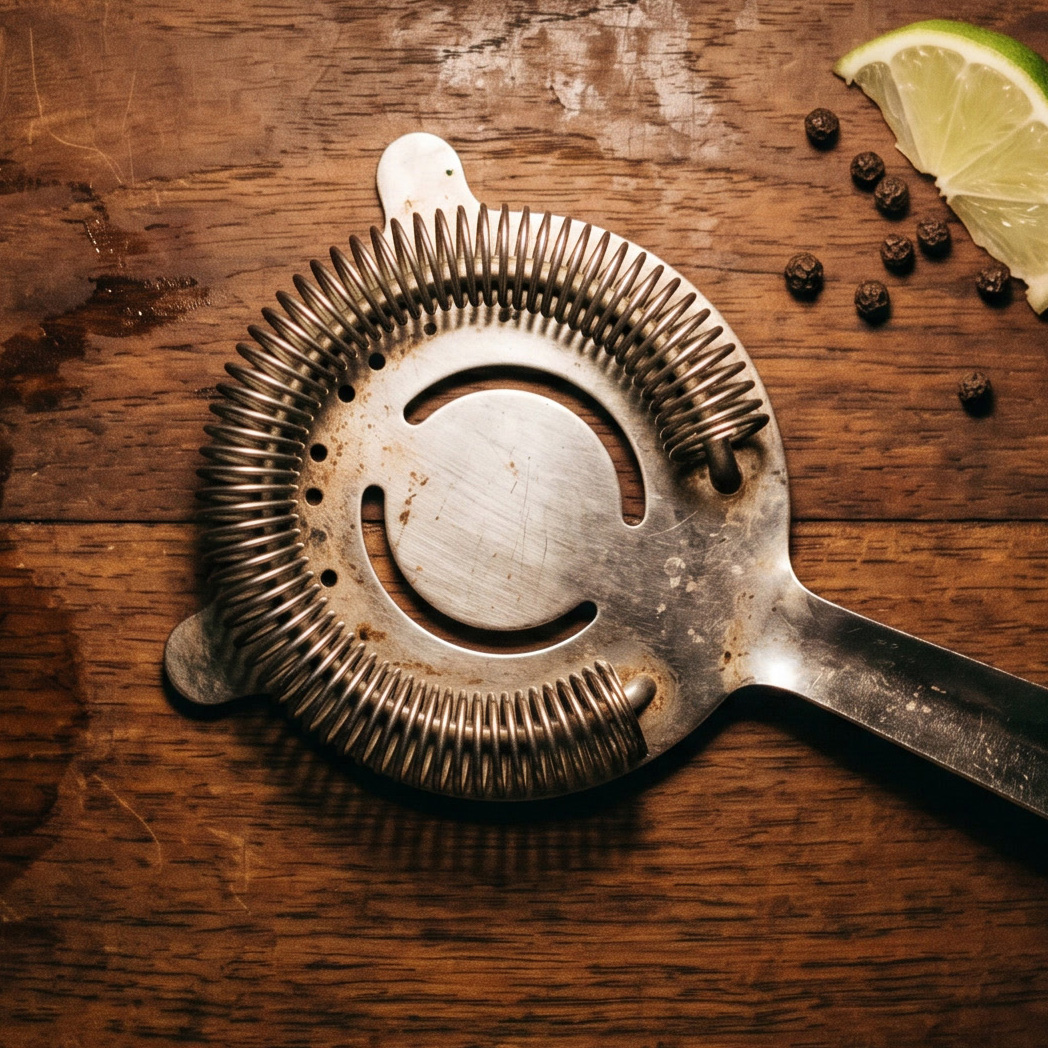
Hawthorne strainer
The coiled-spring strainer for shaken drinks. Cocktail Kingdom’s Hoffman is the standard.
~$10
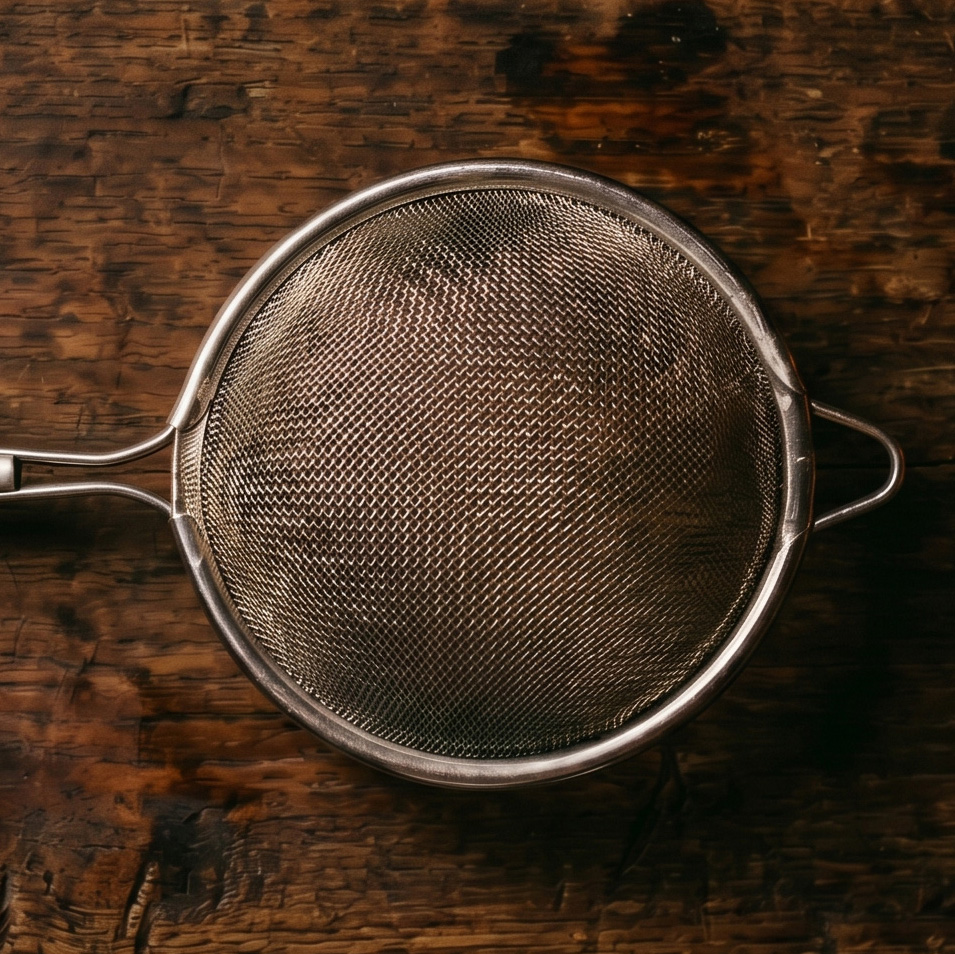
Fine-mesh strainer
For double-straining out citrus pulp and ice shards. Any kitchen-supply brand.
~$8
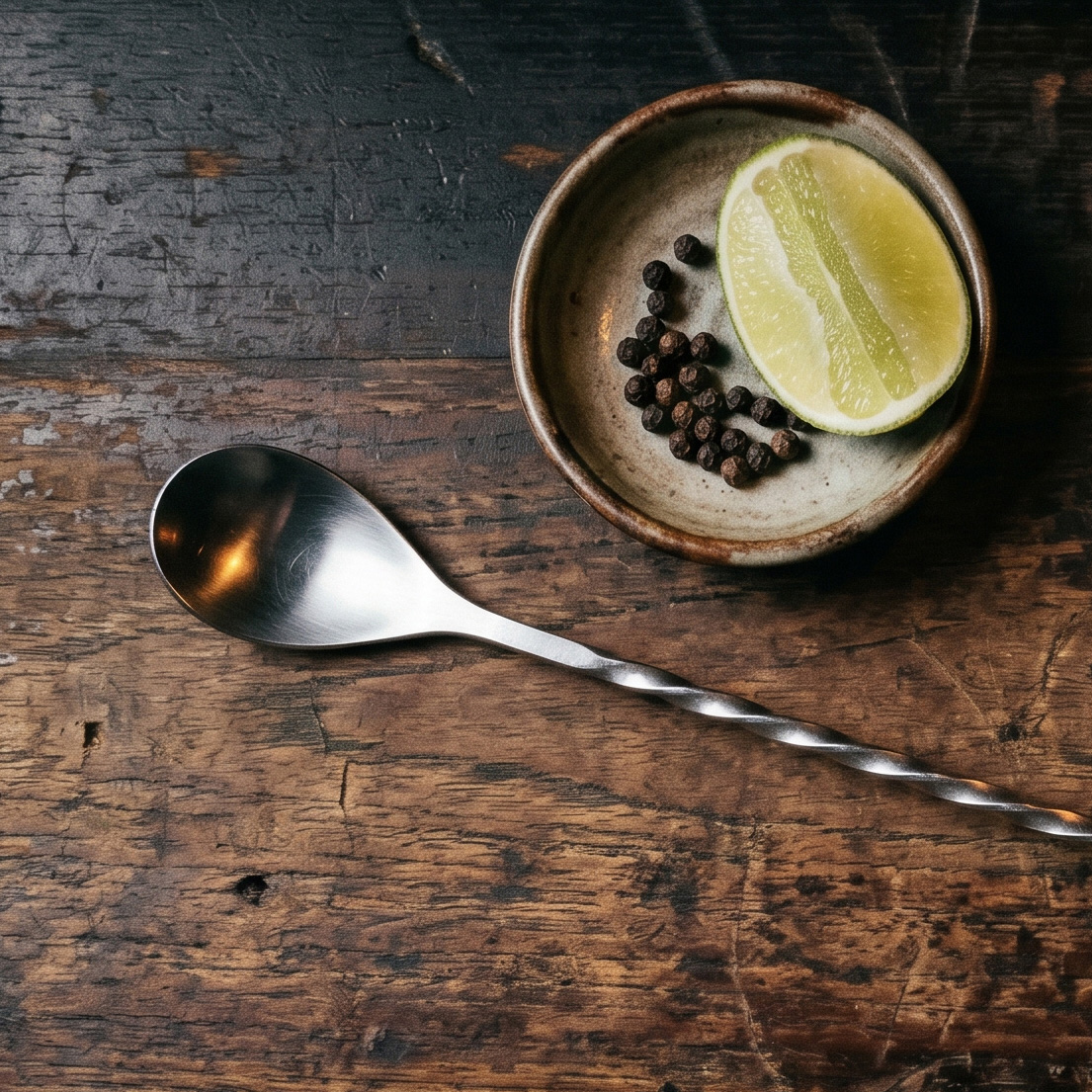
Bar spoon
Long, twisted handle. For stirred drinks and layering.
~$10
Citrus press
Two solid options:
- Amco Mexican Elbow ($15 per color)—the bartender industry standard. Buy the green (lime) first; add the yellow (lemon) when you start juicing oranges.
- Dreamfarm Fluicer ($25)—Chris’ daily-use pick. Folds flat for drawer storage, gentler on the wrist. The Amco is the standard; the Fluicer is the home-bar upgrade.
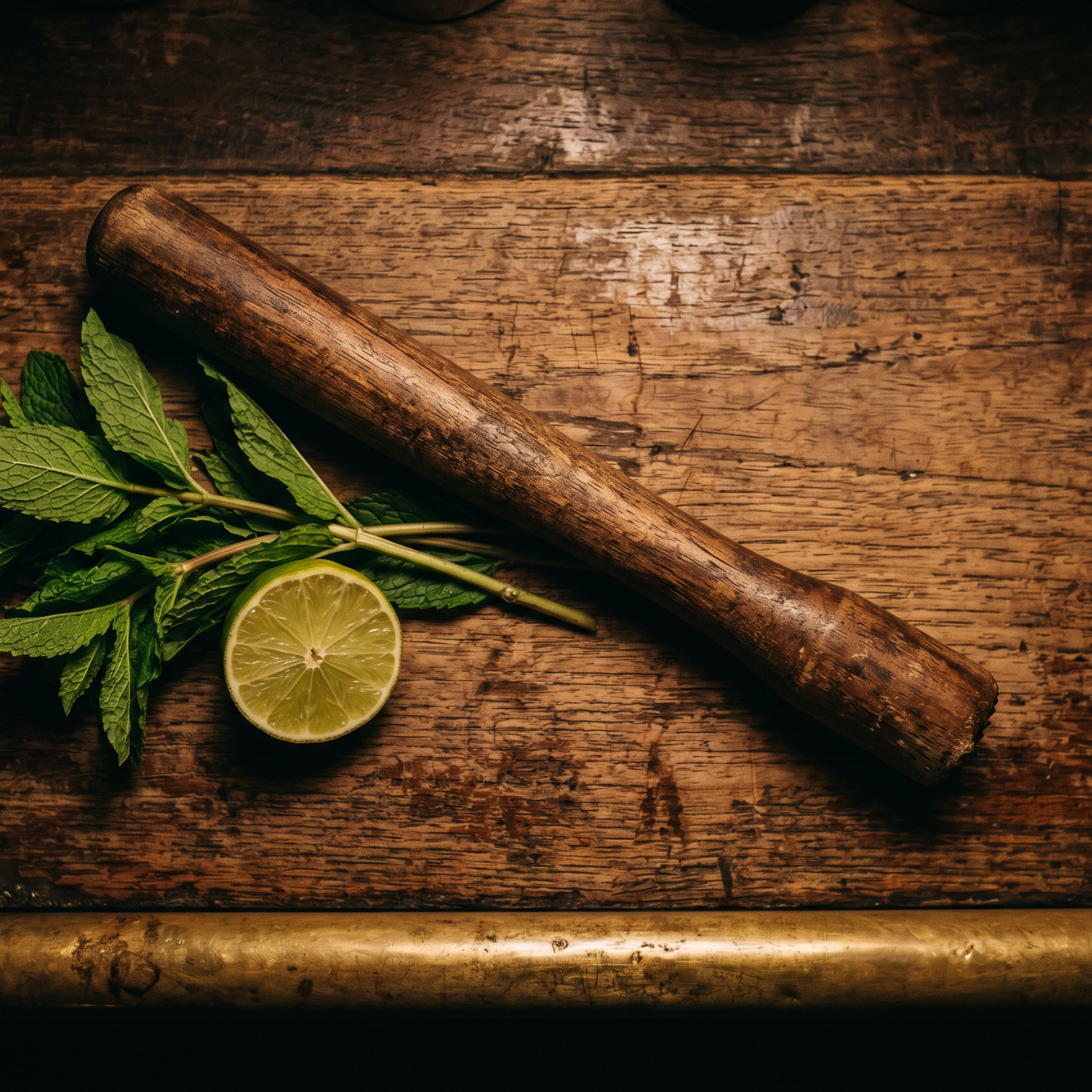
Wooden muddler
From Cocktail Kingdom. For Mojitos, Old Fashioneds, and anything that asks for fresh herb or fruit pressed at the bottom of a glass.
~$10
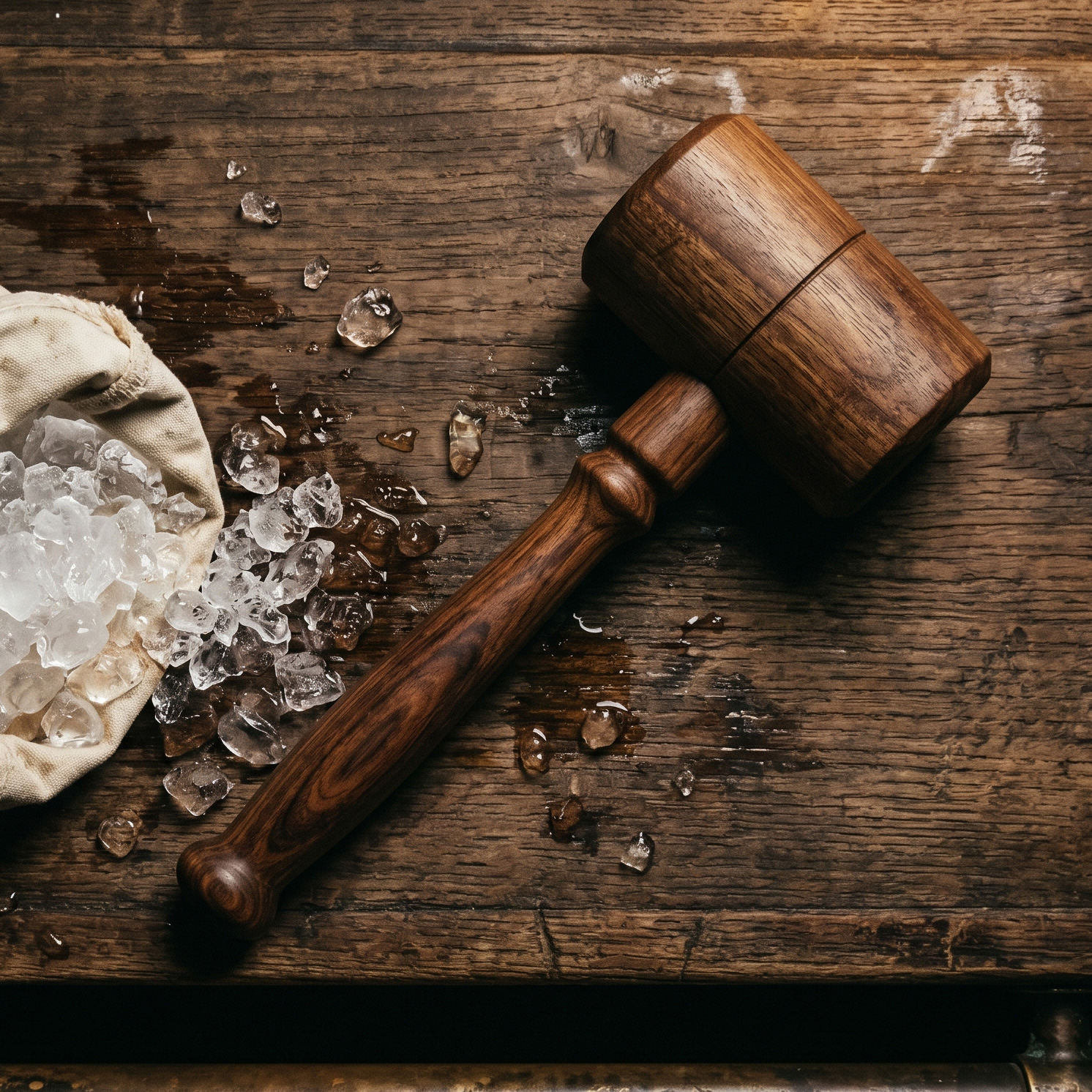
Lewis bag and mallet
Heavy canvas bag, wooden mallet. The traditional way to make crushed ice without a machine. Necessary for canonical Donn Beach builds—the Zombie, Navy Grog, Three Dots and a Dash all want crushed.
~$25
You probably already have a blender. Don’t worry about upgrading it for the starter kit.
Starter bottles (~$80)
Four bottles cover most beginner exotic cocktails:
Bacardi Superior
White rum. The Cuban-tradition standard for Daiquiris, Mojitos, and the column-still-rum side of a Mai Tai. Bacardi’s not exciting, but the Daiquiri is simple enough that the rum doesn’t have to be.
$15
Appleton Estate Signature
Aged Jamaican rum. The Mai Tai workhorse. Sippable on its own as well.
$30
Coco López
Cream of coconut. The 15 oz can. Required for the canonical Piña Colada. One can lasts a few sessions in the fridge.
$8
A bottle of overproof for the Painkiller
Pusser’s Navy Rum if you can find it; Lemon Hart 151 if you can’t.
~$30
Modifiers and syrups (~$45)
The supporting cast. Without these the cocktails don’t work.
BG Reynolds Orgeat
Almond syrup. Required for the Mai Tai. The single most important non-rum ingredient in the exotic-cocktail catalog.
$15
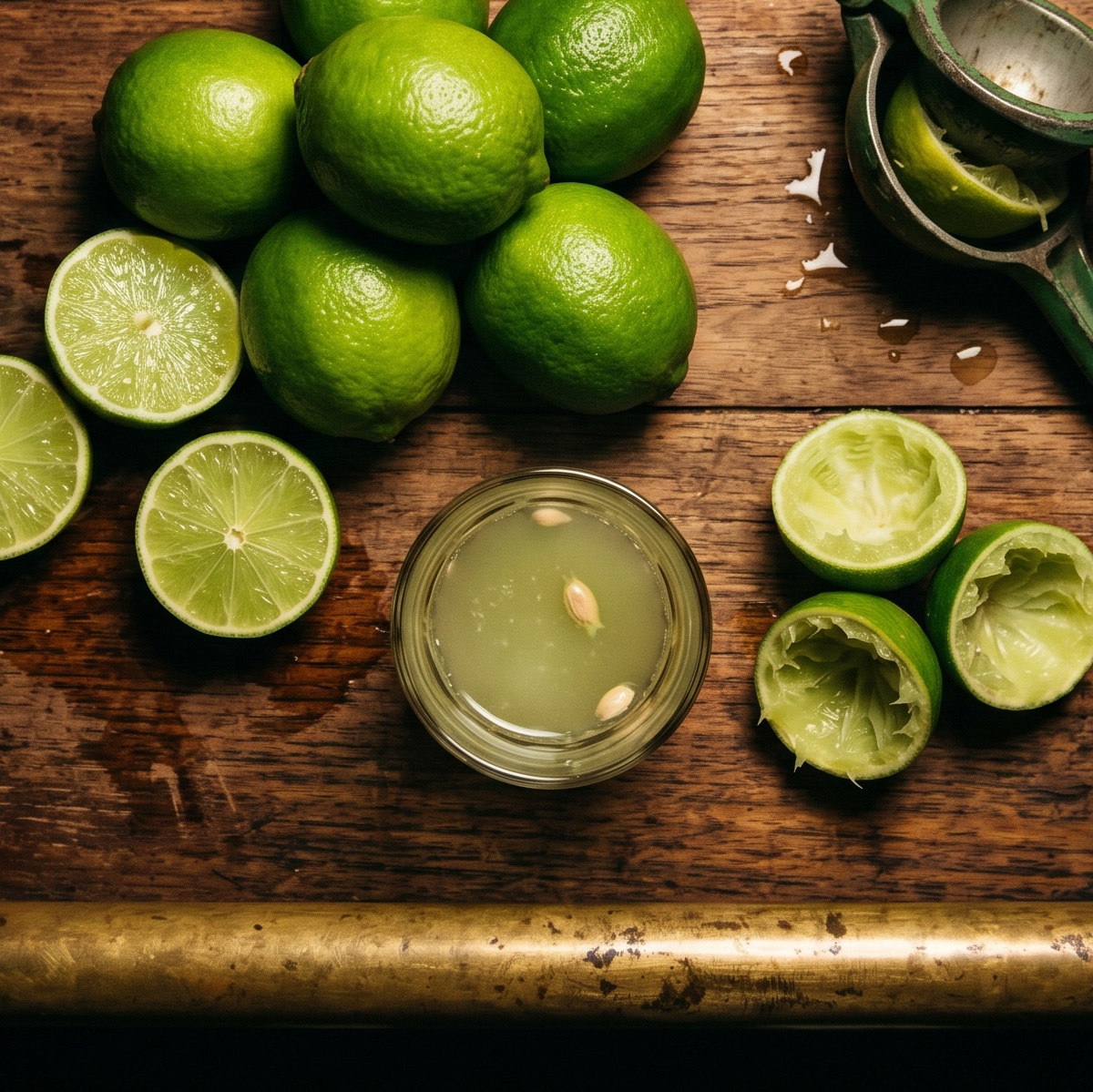
Lime juice (fresh)
Buy a 5-pound bag of limes at the grocery store. Juice them the day you use them; bottled lime juice is a different and inferior product.
~$5
Demerara or rich simple syrup
Make this at home—1 cup demerara sugar dissolved in 1/2 cup hot water.
Free
Velvet Falernum
Add when you’re ready for the Corn ’n’ Oil, Test Pilot, or any Donn Beach build.
$25
Glassware (~$25)
Don’t overthink the starter kit. Four glasses cover the entire beginner catalog:
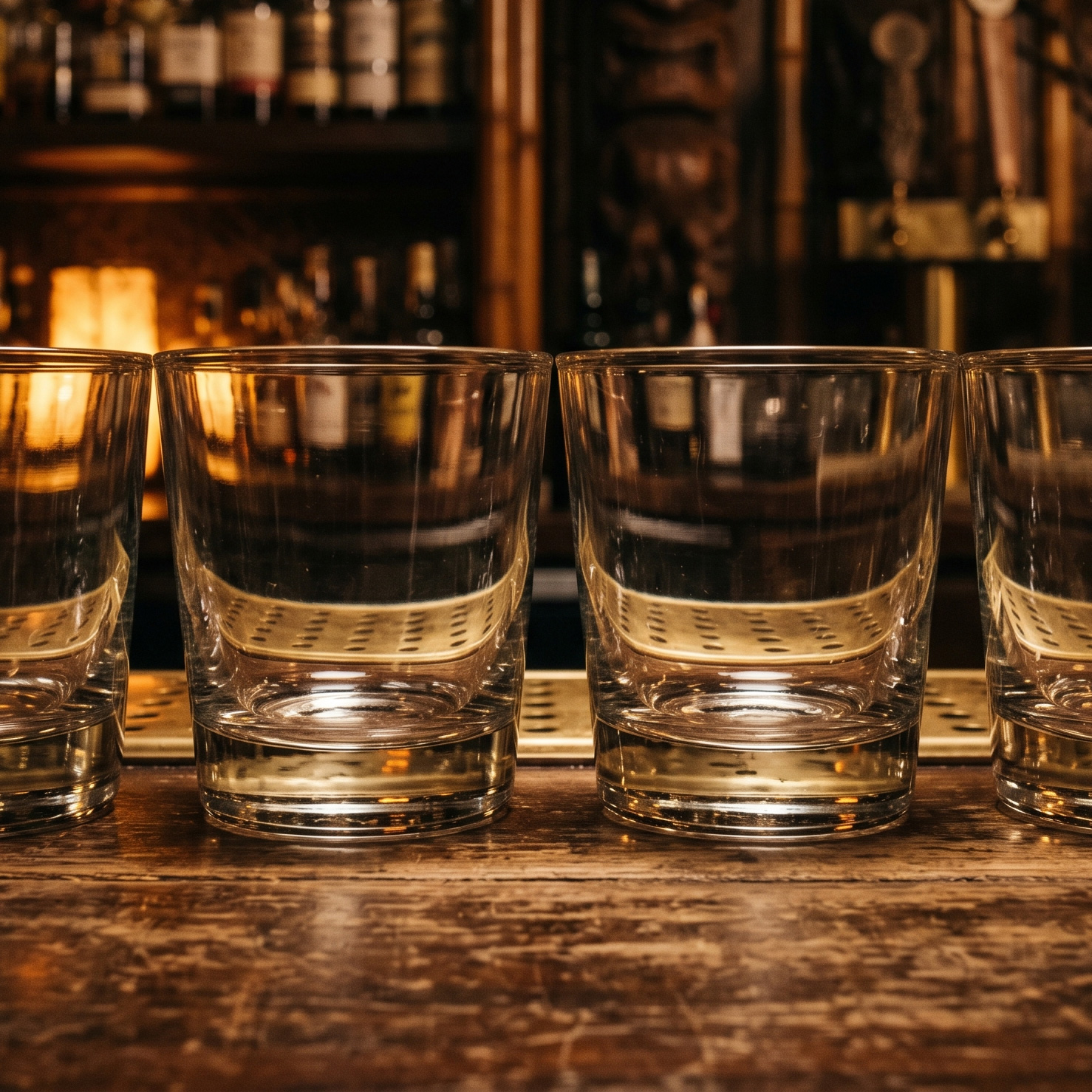
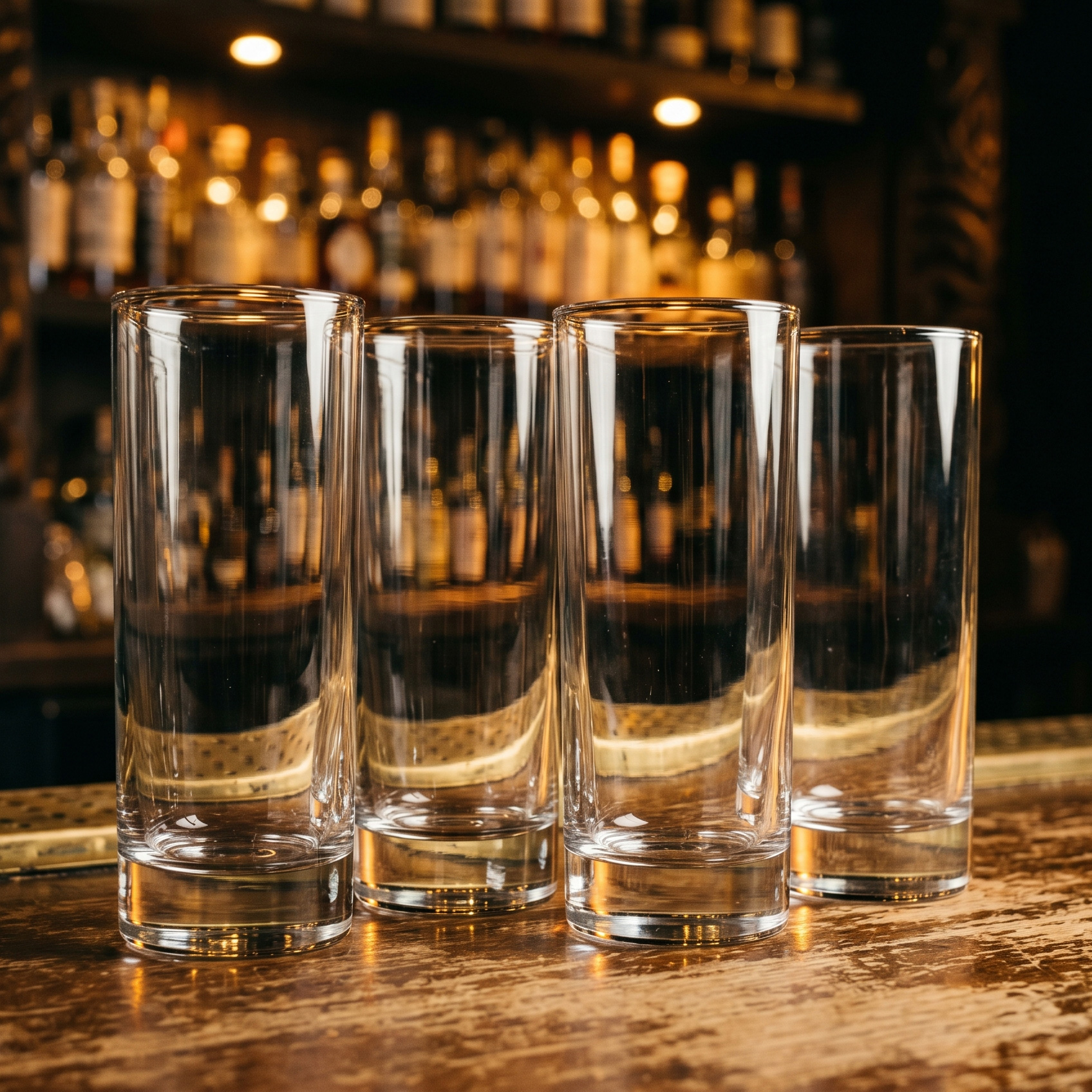
Add coupes and tiki mugs when you’re ready. The starter kit doesn’t need them.
The working bar (cumulative ~$700)
Six months in. You’re making cocktails regularly and you want to deepen the catalog. Add the bottles and bottles that unlock the full Mai Tai, the proper Zombie, and the gin-or-brandy classics.
Tools to add
Hamilton Beach Drink Mixer #936
The flash blender. Necessary for the canonical Zombie, Mai Tai with crushed ice, and most Donn Beach builds. The Vitamix or Blendtec works but the dedicated drink mixer is faster, smaller, and what every serious tiki bar runs.
$60
Vitamix or Blendtec blender
If you want to go full power. Optional; the Hamilton Beach + Lewis bag covers most needs.
$400
Bottles to add (~$350 cumulative for this tier)
Smith & Cross
Overproof Jamaican pot-still rum. The funk anchor for serious Mai Tais and Jungle Birds. The single highest-impact bottle you can add.
$35
El Dorado 12-Year
Aged Demerara. Sippable, also serves as the dark-rum anchor for many cocktails.
$35
Lemon Hart 151
The overproof Demerara. The traditional float on a Zombie (lit, briefly). Distinctive enough that no substitution really works.
$35
Plymouth Gin
For the Singapore Sling, the Suffering Bastard, and a fine gin-and-tonic between sessions.
$30
Luxardo Maraschino
Cherry liqueur. For the Hemingway Daiquiri, the Mary Pickford, and many other classics.
$30
Pierre Ferrand 1840 Cognac
Brandy with a serious cocktail pedigree. Used in the Fogcutter and the Suffering Bastard.
$45
Pierre Ferrand Dry Curaçao
The canonical orange liqueur for the Mai Tai. Cointreau works but Ferrand reads more period-correct.
$35
Modifiers to add
Real grenadine
Or make it from pomegranate juice and sugar.
$15
Start making your own syrups
Orgeat from raw almonds, gardenia mix, Don’s Mix. See the recipes catalog for the homemade preparations—they’re worth the time and the cost difference adds up.
Glassware to add
4 coupes
Stemmed cocktail glasses for spirit-forward drinks served up.
$25
2–4 tiki mugs
The first real ceramic tiki mugs in the collection. See the Drinkware library for makers; Munktiki is the everyday workhorse.
$30–100
Total cumulative spend at the working-bar level: roughly $700. You can now make the entry tier of the canon at canonical spec.
The full kit (cumulative ~$1,500)
The fully-stocked revival-quality home bar. Every Donn Beach build, every Trader Vic reconstruction, every modern revival original is now within reach.
Bottles to add (~$700 cumulative for this tier)
Wray & Nephew Overproof
The Jamaican home-bar rum. Use sparingly in Mai Tais (small splashes float); on its own, sip with respect.
$30
Rhum Clément VSOP
The grassy-rum register. Adds dimension to Mai Tais and unlocks the Ti’ Punch.
$40
A serious tequila
Tequila Ocho Blanco or similar 100% agave blanco. For the El Diablo and the broader Margarita catalog.
$45
Pernod or absinthe
Six-drops-and-no-more in the canonical Zombie. Lasts indefinitely once opened.
$35
Allspice dram
From St. Elizabeth’s. The unsung Jamaican spice liqueur. Float on a Donn Beach build.
$25
The full syrup library
Once the bottles are in place, the syrup library is what separates a good home bar from a serious one. The full kit:
- BG Reynolds Orgeat, Falernum, Passion Fruit, Gardenia Mix, Don’s Mix, Pimento Dram syrup
- Homemade: rich simple, demerara, honey mix, cinnamon syrup
- Real grenadine (homemade or commercial)
- Lime cordial (for the Gimlet)
Total ~$120 in syrup library when fully stocked, with most being shelf-stable for months.
Glassware to finish
2 hurricane glasses
For the eponymous Hurricane and other late-era exotics.
$15
More tiki mugs
A collection of 6–10 is fun; some serious home bartenders build dedicated mug shelves.
A few sour glasses
For variety.
See the Drinkware library for everything.
The buy order
If you take only one thing from this guide, take this. The order in which you buy matters more than what you eventually own:
- Tools first. $100 in the right tools makes every drink better forever. Bottles you can grow into; cheap tools you’ll throw out and rebuy.
- Two rums and a bottle of Coco López. Bacardi + Appleton Signature + Coco López. ~$55. Now you have Daiquiris, Piña Coladas, and the column-still half of a Mai Tai.
- Orgeat. $15. Now you can make a real Mai Tai with the rums above.
- Smith & Cross. $35. Now the Mai Tai is properly funky and you can make Jungle Birds.
- Lemon Hart 151 + El Dorado 12. $70. Demerara unlocked. Zombie reachable. Painkiller proper.
- Plymouth Gin + Luxardo + Pierre Ferrand Cognac. $100. The classics open up.
- Pernod, falernum, allspice dram, the syrup library. $80. Canonical Donn Beach territory.
- Tiki mugs, tequila, the rest. When you’re ready.
This is roughly 18–24 months of incremental purchases for a casually-engaged home bartender, or two weekends for the impatient. Either pace is fine. The point is to never own a bottle you’re not using.
Where to buy
For the bottles and tools listed above, see the /buy directory—every recommended bottle on this guide has its own library profile + affiliate link. Specifically:
- Rum: /buy#rum
- Liqueurs: /buy#liqueur
- Syrups: /buy#syrup
- Mixers (including Coco López): /buy#mixer
- Bitters: /buy#bitters
- Bar tools: /buy#tool
- Glassware: /buy#glassware
For specific bottle recommendations beyond rum, see the dedicated guides as they come online: The Rum Guide, Syrups & Liqueurs, Where to Buy.
For local sourcing—the in-person liquor store with a serious selection, the home-supply store with a real glassware section—use your city’s best independent. Online retailers (Caskers, Total Wine, Drizly) cover the bottles your local store doesn’t carry. Amazon covers most of the tools and the supermarket-shelf brands.
What to skip
A few categories that look tempting in the home-bar starter aisle and aren’t worth the slot:
- Pre-mixed cocktail mixers (margarita mix, daiquiri mix, mai tai mix). Fresh citrus + a syrup will always win.
- Spiced rum. Make falernum and use unspiced rum. The pre-spice rum profiles never match what serious cocktails want.
- Flavored rums (coconut, mango, pineapple, etc.). Use fresh juice or quality syrups.
- Most “premium” young rums under $40 that aren’t from the producers profiled in the Library. The premium-rum aisle is mostly marketing-driven; the trustworthy operations (Foursquare, Hampden, El Dorado, Appleton, Smith & Cross, Hamilton, Banks, the established Caribbean houses) signal their provenance clearly.
- Cocktail-kit subscription boxes. They look fun but the per-bottle math is always worse than buying directly.
- A second blender. One good blender (or the Hamilton Beach drink mixer) covers everything.
Going deeper
Once the bar is stocked, the books on the Library shelf are the next investment:
The 12 Bottle Bar
By David and Lesley Solmonson. The single best starter cocktail book. Not exotic-specific, but teaches the underlying craft.
Smuggler’s Cove
By Martin and Rebecca Cate. The exotic-cocktail bible. Codifies the rum classification system the industry uses.
Cocktail Codex
By Day, Fauchald, and Kaplan. The six-root-cocktails framework. Teaches the grammar.
Sippin’ Safari
By Jeff Berry. The Donn Beach reconstructions, with photographic evidence.
Read one a month for four months. Your home bar will be better at the end than it was at the start by a meaningful margin.
The bar you’re stocking is a working tool, not a museum. Buy what you’ll use this week. Add the next thing when this week’s bottles need company. The home bar that gets used is the home bar that grows.