Esotico Miami
Daniele Dalla Pola’s 2019–2024 Miami flagship—the Italian bartender’s first permanent American bar. The cocktail program filtered traditional exotic-cocktail technique through Italian aperitivo sensibility; the room borrowed from 1960s Italian jet-set tropical rather than mid-century American Polynesian Pop. Closed in March 2024 when Dalla Pola pivoted to the Kaona Room.
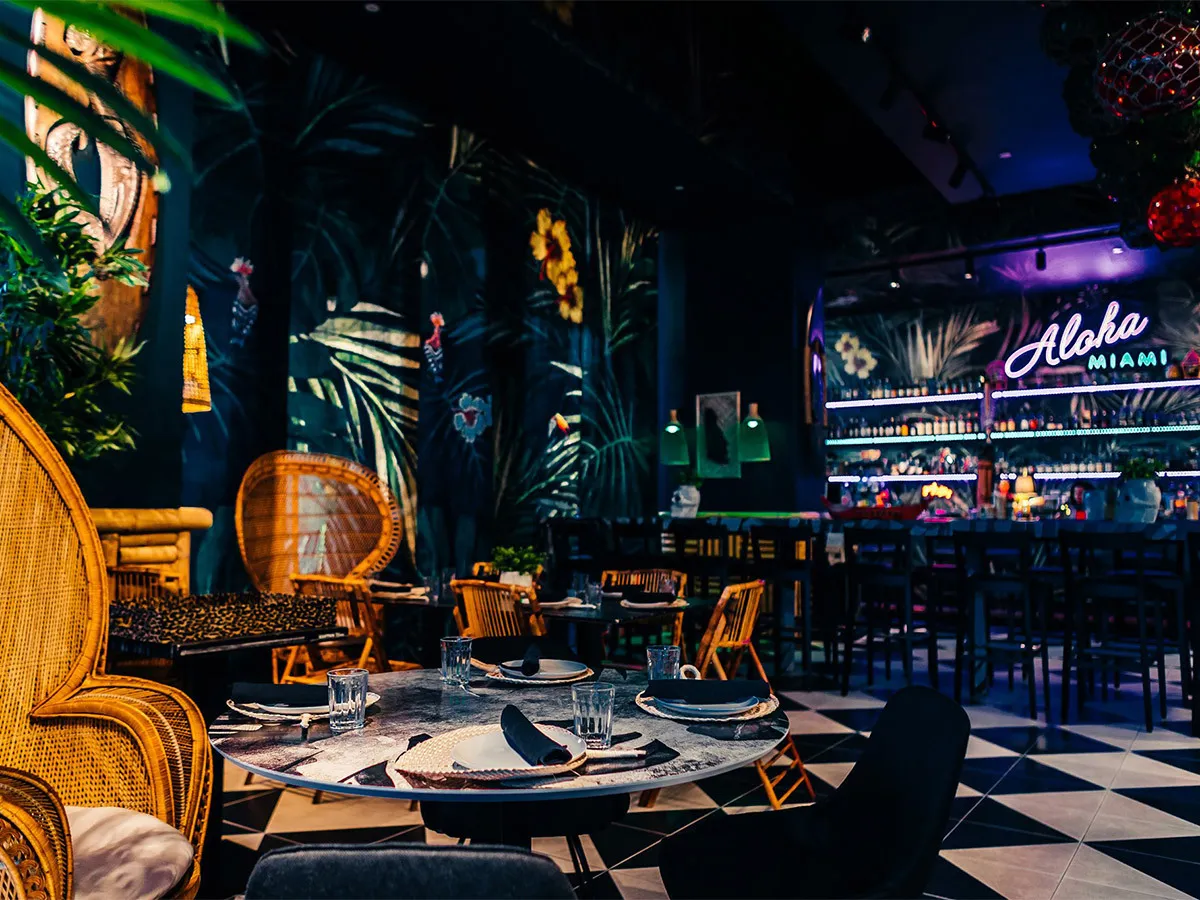
Esotico Miami was the most interesting new tiki bar in America during its 2019–2024 run because Daniele Dalla Pola isn’t an American tiki bartender. He’s an Italian one. Dalla Pola came up through the European cocktail-competition circuit in the 2000s and 2010s—a circuit that operates somewhat parallel to the American craft-cocktail revival, with its own conventions, its own competitions (the Sailor Jerry Spirit of the South competitions, the Bacardi Legacy Cocktail Competition), and its own aesthetic. By the mid-2010s Dalla Pola was a recognized international name in exotic cocktails, with a series of bars and pop-ups across Europe (Bologna, Berlin, London) and a regular presence at American tiki conventions.
Esotico Miami, which opened in 2019, was Dalla Pola’s first permanent American flagship. The cocktail program was recognizably exotic—rum-forward, citrus-and-orgeat-balanced, Mai-Tai-pedigree—but filtered through Mediterranean drinking culture in ways that the American revival doesn’t quite touch. The Negroni Esotico was a deliberate manifesto: classic Italian aperitivo bones, rum substitution where the gin would be, falernum where the vermouth shifts, served in a tiki context. The Esotico (the eponymous house cocktail) borrowed from Don the Beachcomber’s flash-blend technique but used aged Caribbean and Italian liqueurs Dalla Pola had imported through European channels.
The room was also distinctive. American tiki bars typically draw from the mid-century Polynesian Pop aesthetic—thatched roofs, carved tikis, fishing-net ceilings. Esotico Miami drew from 1960s Italian jet-set tropical: the Capri-Positano-Ponza aesthetic of an Italian magazine’s luxury beach holiday spread, with rattan, polished brass, polished wood, and tropical-print upholstery in colors closer to Hermès orange than Don the Beachcomber green. The result read as a Roman tiki bar—a different lineage from any American precedent.
Dalla Pola announced Esotico’s closure in early 2024 and pivoted to the Kaona Room, a smaller and more focused concept in the same Italian-tiki tradition. The five-year Esotico run was short by modern bar standards but long enough to make the case—and influential enough that the lineage continues at Kaona and through the younger American bars (notably the new Tiki Tatsu-ya in Austin, and some pop-ups in New York) that have begun to draw on the European-tiki framework Esotico introduced.
Why it mattered
Esotico Miami was the European tiki tradition operating on American soil for the first time at full strength. It was also the most distinctive aesthetic among the new American tiki bars of its era—a different visual lineage from any of the others. Worth knowing about as the proof-of-concept for where the genre might go next, even though the doors are closed.