Nothing queued. Hit the bookmark on any recipe to remember it.
Buy List
0
Nothing saved. Hit Save on any item under Buy to remember it.
← Visit/Los Angeles, California · Golden Age Survivor
Tiki-Ti
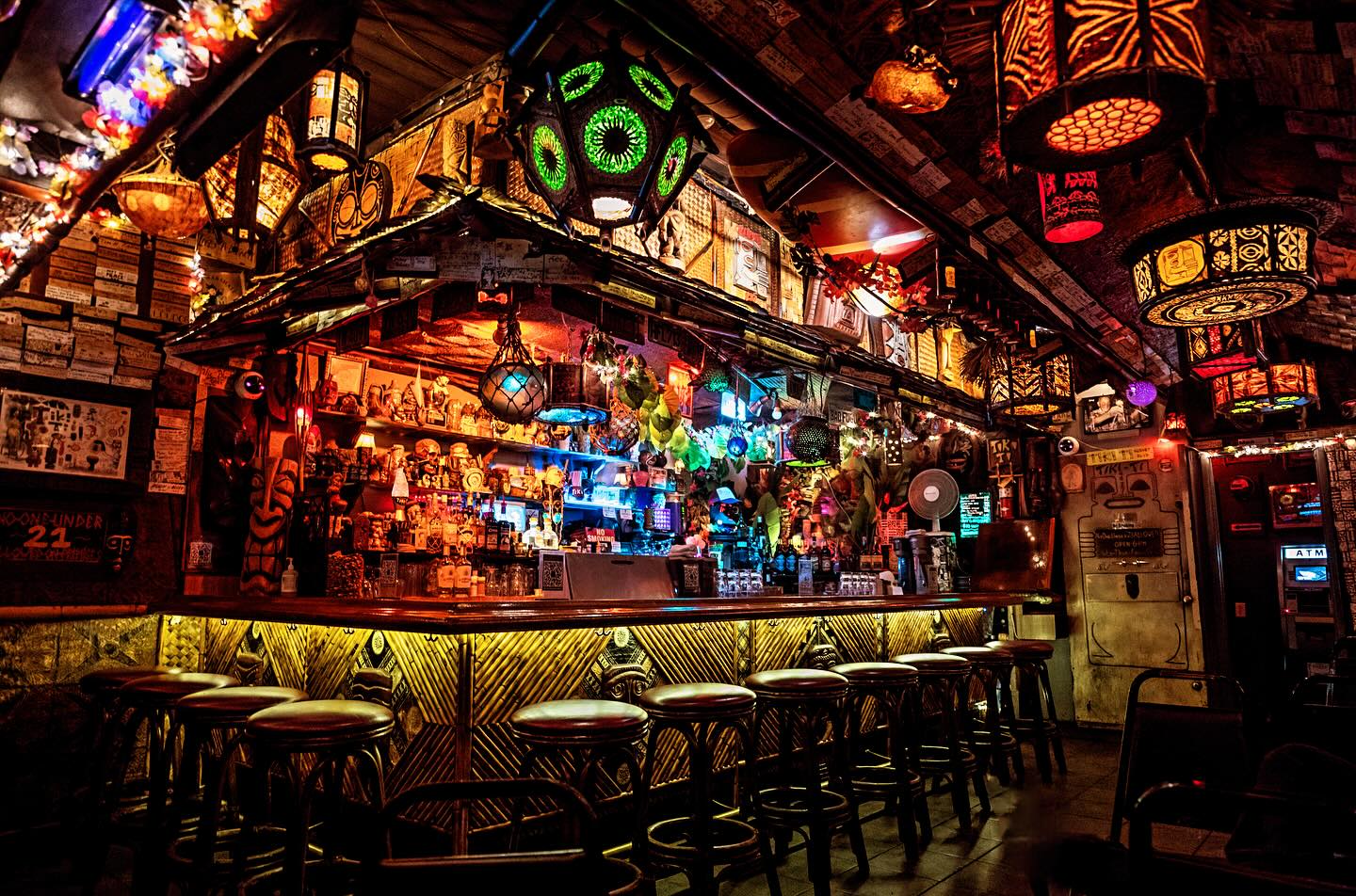
Ray Buhen worked for Donn Beach for twenty-some years, learned every recipe in the book, and opened his own tiny twelve-seat bar in 1961 in a Sunset Boulevard storefront. Three generations of the Buhen family later, it’s still operating, still pouring 90+ recipes (most of them original or recovered), and still drawing both old regulars and pilgrims who flew in to see it. The Bukowski-favorite of tiki bars.
Tiki-Ti is the smallest important tiki bar in the world. Twelve barstools. Maybe forty people standing-room. A single L-shaped bar in a converted storefront on Sunset Boulevard, behind a black-painted wood door that’s easy to miss if you don’t know to look for it. And it has been operating, continuously, since 1961.
Ray Buhen was a Filipino-American bartender who came up through the Don the Beachcomber organization—working for Donn Beach in the late 1930s through the 1950s at the flagship Hollywood and Beverly Hills locations. He learned the recipes the way Mariano Licudine learned them at the other Beachcomber, by being there. When Buhen opened his own bar in 1961, he brought the recipes with him and added a steady stream of his own originals—Ray’s Mistake (which became the bar’s signature), Blood and Sand, the Cobra Fang variant Tiki-Ti calls a Cobra’s Fang, the Stealth Bomber. The menu now runs to 90+ drinks. Many of the originals were Ray’s; many of the rest are family creations from son Mike Buhen Sr. and grandson Mike Buhen Jr., both still tending the bar.
The Tiki-Ti is the kind of place where Jeff Berry researched recipes for his books, where Martin Cate sent his bartenders to learn before opening Smuggler’s Cove, where Charles Bukowski drank and complained about the music. It’s a working bar, not a museum. The drinks are real, the price is fair, the regulars know each other, and tourists from Berlin or Tokyo land at LAX and Uber straight to the door. Last call comes earlier than you’d want.
For exotic cocktail purposes, Tiki-Ti is essential as a recipe archive. Ray Buhen’s documentation of Don the Beachcomber’s catalog is incomplete (he didn’t write it all down) but more accurate than most secondhand sources. Jeff Berry’s reconstruction work in Sippin’ Safari and Beachbum Berry Remixed draws on Tiki-Ti research. Drinks on the Tiki-Ti menu today that are credited as Don the Beachcomber originals are the closest thing to a primary source still operating in America.
The other Tiki-Ti thing worth knowing: cash only. No food. No reservations. The Buhens close it when they want to—announced via the website—and they take long vacations. Check before you go.
Order first
Ray’s Mistake (the eponymous founder original). The Hot Pastrami Sandwich (it’s a drink). The Blood and Sand. The Cobra’s Fang.
Why it matters
Ray Buhen’s working notebook is one of two surviving primary documentation paths from Donn Beach to the modern day (Mai-Kai’s Licudine log is the other). Tiki-Ti is where that lineage is still pouring. Twelve seats; ninety drinks; six decades.