Saved & Queued

0

No favorites yet.
Hit the heart on any recipe.

0

Nothing queued.
Hit the bookmark on any recipe to remember it.

0

Nothing saved.
Hit Save on any item under Buy to remember it.

Learn · Bar Tools

The Toolbox

The shakers, jiggers, strainers, flash blenders, and citrus presses that make a working home bar. Seven profiles of the manufacturers worth knowing—from the high-end specialty house Cocktail Kingdom to the kitchen-store workhorse OXO to the flash blender that every tiki bar has been running since 1936.

Cocktail Kingdom

Est. 2007, New York

The high-end specialty bar-tool company founded 2007 in New York by Greg Boehm and shaped by the working bartenders behind the modern cocktail revival. Cocktail Kingdom’s Japanese jiggers, Boston shakers, Yarai mixing glasses, and Hawthorne strainers are what serious bars buy and what a home bar should aspire to.

Read →
OXO

Est. 1990, New York

The American kitchen-tool company that quietly makes the best entry-level bar tools on the market. OXO’s Steel Cocktail Shaker, Steel Bar Spoon, Steel Double Jigger, and Wood Muddler are not the gold standard, but they are the right answer for a starter home bar that doesn’t yet want to commit to Cocktail Kingdom pricing.

Read →

Hamilton Beach Drink Mixer

Est. 1910 (company); 1936 (Drink Mixer model), Glen Allen, Virginia

The flash blender that has been in continuous production since 1936 and is the only acceptable answer for a tiki bar’s Mai Tai or Zombie. The Hamilton Beach 936/950 Drink Mixer—also sold as the Trader Vic’s Drink Mixer—is what every serious tiki bar in the world uses. A genuine essential.

Read →

Microplane

Est. 1990, Russellville, Arkansas

The handheld grater that transformed cocktail garnish work. Microplane’s fine rasp—originally designed for woodworking, repurposed for kitchen use in the early 1990s—is the only correct tool for fresh nutmeg, lemon zest, lime zest, and any aromatic finish that needs to be a powder rather than a strip.

Read →

Amco Mexican Elbow

Est. 1973, Amco Houseworks

The handheld lime and lemon press that nearly every bar in the world uses for fresh citrus. Amco Houseworks’ Mexican Elbow has been the standard model since the 1980s—a simple cast-aluminum lever press that extracts a complete lemon or lime in two seconds with no seeds, no rind oil, and no juicer cleanup. Essential.

Read →

Dreamfarm Fluicer

Chris’ Pick
Est. 2008, Adelaide, Australia

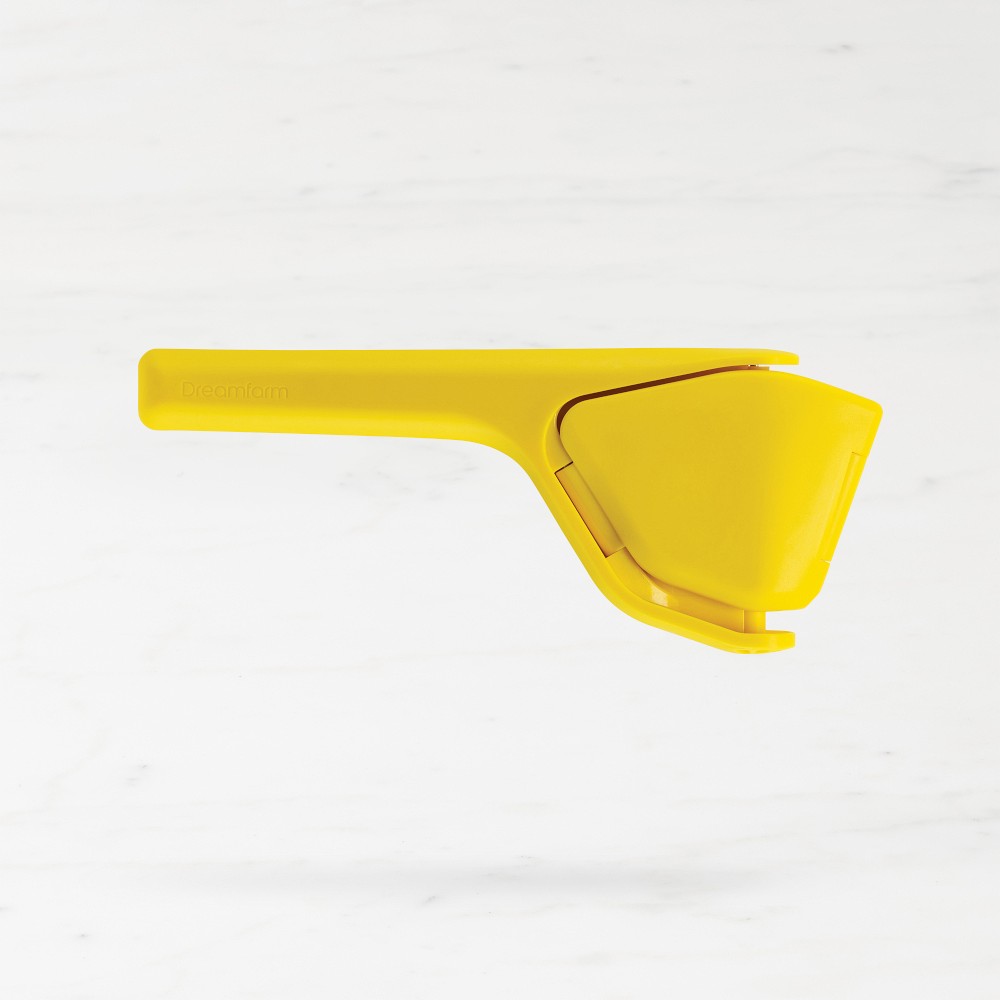
The Australian-designed flat-folding hand-press citrus juicer that improves on the canonical Mexican Elbow. Hinges open to a flatter footprint, presses with less wrist torque, drains a more complete extraction, and folds down to drawer-flat for storage. The Mexican Elbow is the bartender standard; the Fluicer is the better tool.

Read →

Tovolo

Est. 2002, Seattle, Washington

Seattle-based kitchen-tool company best known for the King Cube Ice Trays and Sphere Molds that brought clear, slow-melting cocktail ice into reach of home bartenders. The big ice you see in modern craft cocktails comes from a Tovolo mold roughly 80% of the time.

Read →

Black+Decker CJ625

Est. Black+Decker brand: long-running; this model produced 2010s–present

The $25 motorized citrus juicer that handles a party’s worth of limes without making you do the work. Plastic-bodied, single-cone, dishwasher-safe parts. Not a pro tool, but for the home bartender batching juice before a Mai Tai night, it’s the starter electric juicer that earns the counter space.

Read →

Cocktail Pirate / Handcrafted Swizzles

Est. Caribbean artisanal tradition; Cocktail Pirate distribution since ~2010

The traditional Caribbean swizzle stick, hand-carved from the branches of the Quararibea turbinata tree (bois lélé in French, swizzle stick tree in English), is the only correct tool for making a Queens Park Swizzle or a Rum Swizzle in the original Trinidadian-Barbadian style. Cocktail Pirate and a handful of small-batch sources make the real thing for home bartenders.

Read →

Cuisinart CCJ-500

Est. Cuisinart brand: 1971; current model produced mid-2010s–present

The mid-range electric citrus juicer that splits the difference between the $25 starter and the $150 pro tool. Stainless trim, adjustable pulp control, larger juice reservoir, and a more durable motor. For the home bartender who batches juice often enough to outgrow the Black+Decker but doesn’t need the Breville. ~$50.

Read →

Breville BCP600 Citrus Press

Est. Breville brand: 1932; current model produced 2010s–present

Breville’s $150 commercial-grade citrus press. Quasi-restaurant-quality build—die-cast metal arm, induction motor, dual cones (lime/lemon and orange/grapefruit), built-in pulp filter. The lifetime electric juicer. Overkill for occasional party use; essential for the home bar that juices serious volume regularly.

Read →

← All categories

Search Forbidden Altar

Cmd+K to open from anywhere · Esc to close